
Confirm a Sharp County Arrest Process
One good phone call can split current status from case history. Ask the Sharp County sheriff first whether the warrant is active today. Then ask for the date, the alleged charge, the issuing court, the bond amount, and how to surrender. Repeat the case number and court department back to the clerk. Sharp County shares names like anywhere else, and a name collision can send you down the wrong path. A Most Wanted page is not the full answer either. That program lists only a chosen few and warns its own details can be wrong. Next, take the case number to the issuing clerk and ask about the docket, the next hearing, and any later order. Search ARCourts can help you find the case, but it is not a live warrant database. A filing can stay online after service, recall, or quash. Restricted or delayed data may never appear at all. Write down which office gave you each fact, and note when it was confirmed.
After Sharp County Warrant Service
Do not guess the next step from the type of warrant alone. Ask the holding agency to name the originating court first. Then call the Sharp County sheriff and the issuing clerk yourself. Talk about statewide misdemeanor service or felony extradition explains reach at best; it sets no transfer schedule. Court review, custody status, and the law decide the outcome. After service or surrender, confirm the first-appearance date. Get the case number too. Ask which court holds the matter and what date is set. Release from jail does not dismiss the charge, and a dismissal does not erase the arrest from the record. A booking entry marks an arrest, nothing more. Precise labels help family members reach the right Sharp County office without treating an allegation as a conclusion.
How Arrest Warrants Work in Sharp County
The Sharp County Sheriff says the office holds thousands of arrest warrants issued by District Court and Circuit Court. The workflow is straightforward. It begins when an affidavit, complaint, information, or other initiating paper reaches a judge. The court then decides whether the legal grounds support a warrant. Law enforcement receives the warrant and may attempt service. After service, the person may be booked, brought to first appearance, released under conditions, or held for a judge. For current confirmation, call the Sheriff's Office at 870-994-7356. Ask for the warrant date, the charges, the issuing court, the bond, and instructions. The office FAQ says staff can provide those categories.
Sharp County CID Affidavit Stage
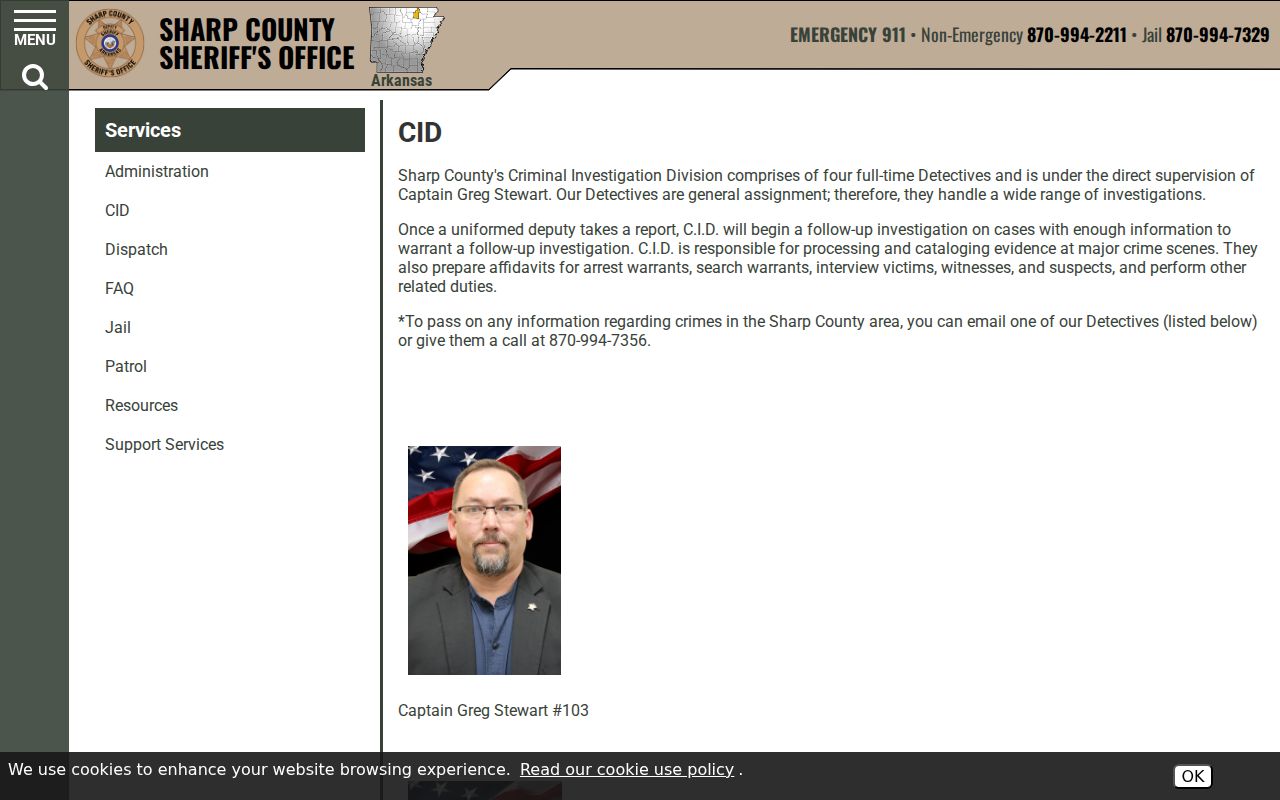
Sharp County detectives do the groundwork. The Criminal Investigations Division prepares affidavits for arrest warrants and search warrants. An affidavit is a sworn statement of facts supporting a request for judicial action. Its existence does not make every affidavit public, and it does not mean a judge approved the request. Nor must an open investigative file be released. That CID page documents this local stage.
Ask narrowly for the warrant or its return if that answers the question. Open investigations, sealed records, and juvenile material can be restricted in Sharp County. A focused request beats a demand for a whole investigative file.
Arrest Warrants: What They Contain
Sharp County publishes no blank warrant form and no complete public schema. The sheriff confirms four public-facing items. Treat other fields as possible, not guaranteed, until the court or agency confirms them.
| Warrant date | Date supplied by the sheriff or issuing court |
|---|---|
| Charge | Alleged offense; not a conviction |
| Issuing court | District or Circuit Court and relevant department |
| Bond | Amount and authorized type, if one is set |
| Case number | Docket identifier, such as court case number |
| Return | Officer’s report to the issuing court about execution or nonexecution |
Identity, service location, and investigative details may be sensitive or restricted in Sharp County. Collect only the personal data you need to resolve a genuine match.
Warrant Returns in Sharp County
A return is the officer's report back to the issuing court on whether the warrant was executed. Arkansas Code §16-81-110 governs it. The return sits in the court-facing record trail. It is not a public Most Wanted entry. Once you have a case number and court, Search ARCourts may surface the filings, future events, judgments, and some documents for Sharp County cases. That docket view is not synced with live sheriff records, though. So go to the clerk next. Ash Flat District Court is 870-994-2745. Cherokee Village District Court is 870-257-5522, and for Sharp County the County/Circuit Clerk is 870-994-7361.
How Warrants Get Served in Sharp County
The Sharp County sheriff's FAQ says deputies serve warrants in the field, during traffic stops, and at a last-known home or workplace. Some people choose to surrender voluntarily after coordinating with the office. That describes county practice in general terms. It predicts nothing about a specific person or address.
- The court issues the arrest warrant.
- Law enforcement receives or accesses the process.
- A deputy may encounter the person or arrange surrender.
- Service can lead to booking and first appearance.
- The court or judge addresses bond, release, and future dates.
Safety: Do not approach, follow, detain, or confront a person based on warrant information. Call 911 for an emergency and 870-994-2211 for non-emergency routing.
Sharp County Service Beyond County Lines
A misdemeanor warrant from Sharp County can travel. The sheriff's FAQ says Arkansas officers may serve one anywhere in the state. Felony warrants reach farther. They are extraditable anywhere in the United States, and the office says it generally authorizes extradition readily once another agency reports someone is held. The result in any single case still turns on the warrant, the jurisdiction, the holding agency, and what the courts do. A person held elsewhere should press the holding agency to name the originating county and its process. Then call Sharp County or a lawyer. Nobody can promise a transport date or bond. Federal warrants run through the Eastern District of Arkansas and the U.S. Marshals Service. A local page cannot confirm those.
Arrest Warrants, Summonses, and Bench Warrants
A warrant, a summons, and a bench warrant each do different work in Sharp County criminal court. The signed order controls.
| Process | Typical role | Key distinction |
|---|---|---|
| Arrest warrant | Authorizes arrest after judicial process | May exist before any booking |
| Summons | Directs a person to appear | Does not authorize arrest in the same manner |
| Bench warrant | Often follows a missed appearance or noncompliance | Usually connects to an existing docket |
| Search warrant | Authorizes a search described by the order | Not itself an arrest record |
A warrant in Sharp County is judicial process, nothing more. The court's written order is the thing that counts.
Sharp County Booking Comes Later
Warrant records and arrest records answer different questions. A warrant is judicial process; an arrest record documents a custody event. Booking can follow service of a warrant, an arrest made without one when the law allows, a hold from another jurisdiction, or some other lawful basis. So an unserved Sharp County warrant will not show up as a jail booking, and a missing jail entry proves nothing about warrant status. The Sharp County detention center sits at 84 Arnhart Street, behind the courthouse, and answers at 870-994-7329. That number handles custody and jail routing only. If a relative is locked up, ask the jail where they are held and what happens next. Bring questions about bond, first appearance, or the legal process itself to the sheriff or the court.
Sharp County Arrest Record Access
The Arkansas Freedom of Information Act lets you request public records in person, by phone, mail, fax, email, or other electronic means. Be specific enough that the office can find the record. The Sharp County sheriff says most records can be viewed or copied for a nominal fee, though no warrant-specific fee is published. Some material stays closed: open or ongoing criminal cases, personnel files, sealed or expunged records, and juvenile matters. Court records carry their own limits under Administrative Order 19. If a request is denied, ask which exemption or rule applies and whether the rest can be released. The County/Circuit Clerk page lays out the circuit record route for Sharp County.
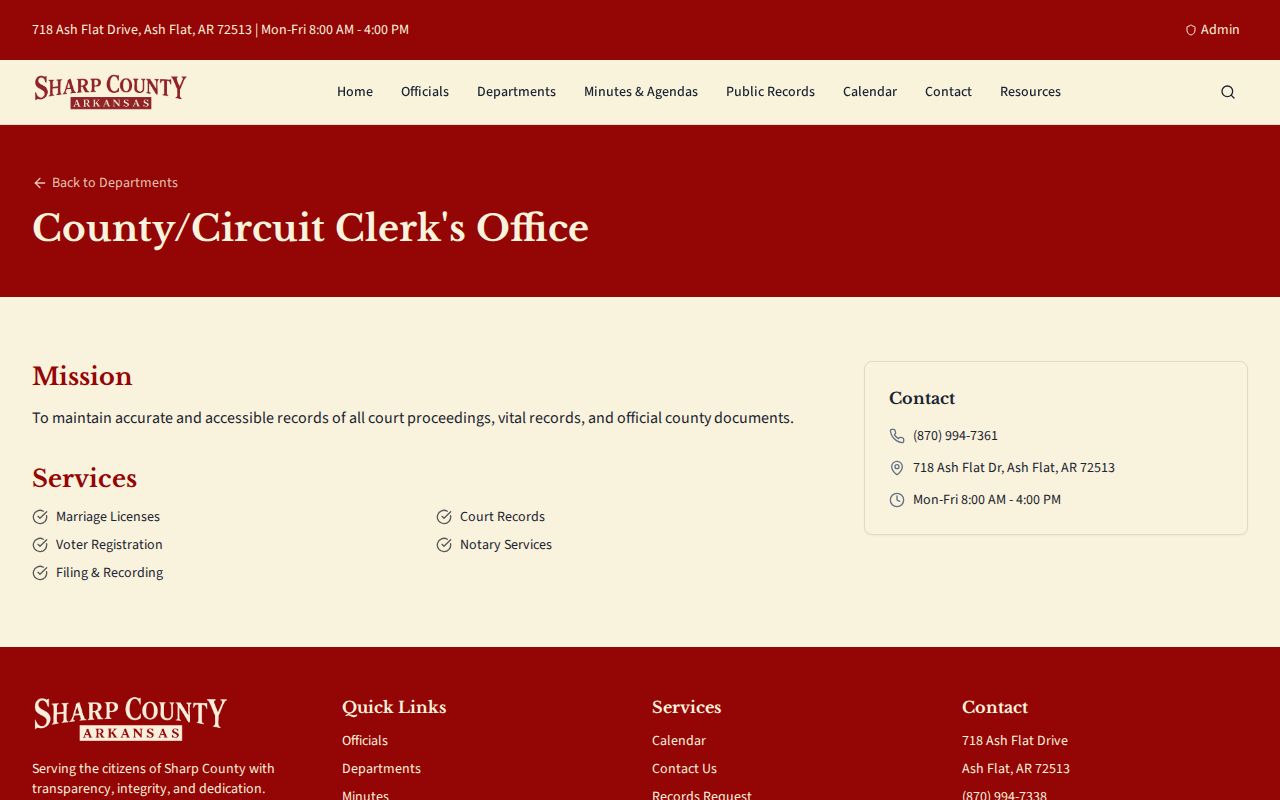
The clerk maintains court records; the sheriff handles enforcement confirmation.
Handling an Arrest Warrant in Your Name
Call the Sharp County sheriff first. Confirm the warrant's date, the charge, the court, the bond, and current instructions. Ask whether your lawyer should contact the court before you report, where and when to show up, what identification or paperwork to bring, and whether a judge must rule on release. Never appear unannounced at a jail, courthouse, workplace, or home on the strength of an old web result. On bond, the sheriff says most Sharp County warrants carry a specified amount, payable in cash or through a surety bond from a licensed bail-bonding company. Own-recognizance and property bonds generally are not accepted that way. Some warrants set no bond at all, meaning custody until a judge acts. There is no universal bond schedule.
After action: Keep the court order, bond or release papers, case number, and next date. Ask when court and sheriff systems will reflect the change.
A disputed identity, a sealed case, an alleged unlawful arrest, or a defense calls for qualified counsel in Sharp County. Public warrant records settle none of that.